Our history
Pushing the boundaries of the law for nearly 40 years
Our roots go back to 1987, when Deighton Guedalla was founded in Islington, London by Vicky Guedalla and Jane Deighton — two like-minded solicitors who had represented members of the African National Congress, Greenham Common protesters, and the National Union of Mineworkers. The firm quickly gained a reputation for litigation against public authorities, particularly the police, at a time when legal oversight was still evolving.
Landmark Court of Appeal cases brought by our clients expanded the scope of the Race Relations Act 1976, establishing that police owed victims of crime a duty of care under the Act (Farah, Alder, and Brooks cases). The firm represented Duwayne Brooks (now MBE), friend of Stephen Lawrence, in the Stephen Lawrence Inquiry — helping to shine a light on other racist murders that had previously been ignored.
The Inquiry’s conclusion — that "institutional racism affects the Metropolitan Police and police services elsewhere" — continues to shape our work. We have gone on to represent many families affected by race-related deaths in custody and under restraint.
It was during this period that Jo Eggleton and Sarah Ricca joined the growing firm, leading pioneering work on deaths in custody and the protection of female victims of crime.
Pierce Glynn and Public Law
In June 1997, the other predecessor firm of DPG, Pierce Glynn, was founded by Stephen Pierce and Polly Glynn in Southwark, London. They were soon joined by like-minded public lawyers - including Sue Willman, Adam Hundt and Zubier Yazdani - working alongside a committed support team, including Hasan Khalifah and Marianne Morris, who are still with the firm today.
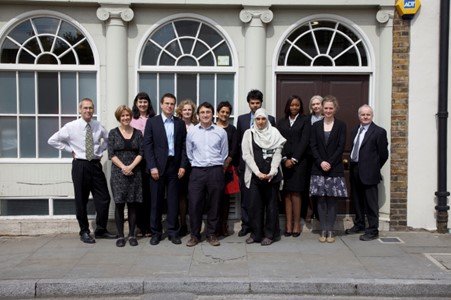
The firm built a strong reputation for its expertise in housing, social security, and community care law, with a focus on supporting marginalised individuals and communities.
Much of the firm's work focused on representing vulnerable clients at risk of falling through the cracks of the UK’s fragmented social welfare system — including migrants, trafficking survivors, and victims of torture. Sue Willman authored the leading legal textbook on this area of law. Our clients' cases (SL v Westminster and others) helped establish key legal duties on the government to support migrants.
During the austerity era from 2008 onward, the firm represented organisations like Southall Black Sisters in the landmark Kaur & Shah case, securing legal protections that ensured the continuation of vital public services.
2012: Deighton Guedalla X Pierce Glynn
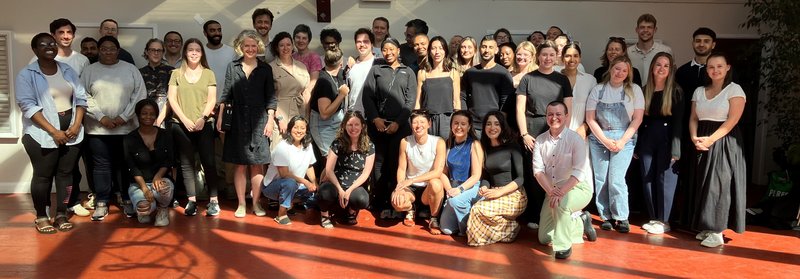
In May 2012, Deighton Guedalla and Pierce Glynn merged to form Deighton Pierce Glynn (DPG), combining expertise in civil actions and inquests with judicial review, to more effectively hold public authorities to account. That same year, the firm opened its Bristol office.
Helping More Clients, Achieving More Change
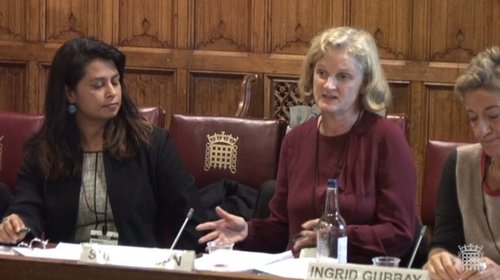
DPG has grown to become the UK’s largest law firm dedicated to public law and civil liberties, helping thousands of clients secure justice. Working in partnership with organisations like the British Red Cross, we developed the PAP Scheme, which has enabled thousands more to access legal support by training frontline advisers to prepare pre-action letters under our supervision.
Our clients’ cases regularly make headlines — and, more importantly, drive real change. Recent examples include:
- Deaths in custody: A series of inquests exposed serious failures at HMP Woodhill and other prisons, including the UK’s first inquest verdict of unlawful killing in such a setting.
- Windrush justice: The High Court found the Home Secretary acted unlawfully in refusing to implement key recommendations from the Windrush Lessons Learned review.
- No Recourse to Public Funds: In a long-running legal challenge, we repeatedly secured rulings against the UK government’s policy that excluded many residents and families — including UK citizen children — from benefits, even during the pandemic.
- Mass surveillance: In 2021, the Grand Chamber of the European Court of Human Rights ruled in favour of our clients, Big Brother Watch and others, finding that the UK’s surveillance regime breached Articles 8 and 10 of the ECHR.
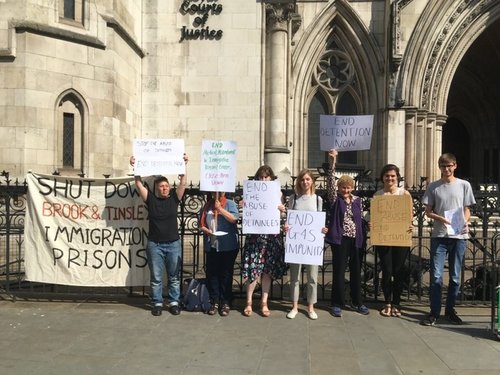
- Immigration detention: The Brook House Inquiry found that abuse and conditions at the detention centre breached human rights standards.
- Asylum housing: The High Court ruled that conditions at Napier Barracks, a flagship asylum camp, were unlawfully inadequate.
- Police failings in domestic abuse cases: A series of inquests revealed systemic failures in police protection of victims of domestic abuse.
- Civil partnerships: The Supreme Court victory in Steinfeld & Keidan led to the extension of civil partnerships to different-sex couples in 2018.
And, more than 30 years after Deighton Guedalla represented Duwayne Brooks MBE and the family of Rolan Adams in relation to racist murders in the 1990s, we now represent them before the Undercover Policing Inquiry, challenging the unlawful surveillance of their campaigns for justice by undercover police officers.
Our Ongoing Commitment
DPG remains, as it has always been, a law firm with a team of dedicated lawyers who share a deep commitment to providing high-quality legal support to vulnerable clients who are victims of abuses of power.
Our team is driven by our values of respect, fairness, openness, integrity, honesty, and promoting equal opportunity and empowering each other to fulfil their potential. This commitment is reflected not only in the cases we take on, but in the way we work - with passionate dedication to making a meaningful difference, not just to our clients but to their families and their communities.